Drawing Supplies: the complete guide
Updated March 4, 2026 · 14 min read
Drawing is the cheapest way to become an artist and the easiest place to waste money. A beginner needs about six things; most starter kits sell thirty. This guide explains what each category of drawing supplies actually does, which specifications matter, and where the price jumps are real versus marketing.
Every recommendation below comes from supplies we have drawn with ourselves — graphite worn down to stubs, erasers used until they crumbled. Where you see a product link, it points to Amazon with our associate tag, which funds the testing. Our verdicts would be identical without it.
What actually counts as drawing supplies
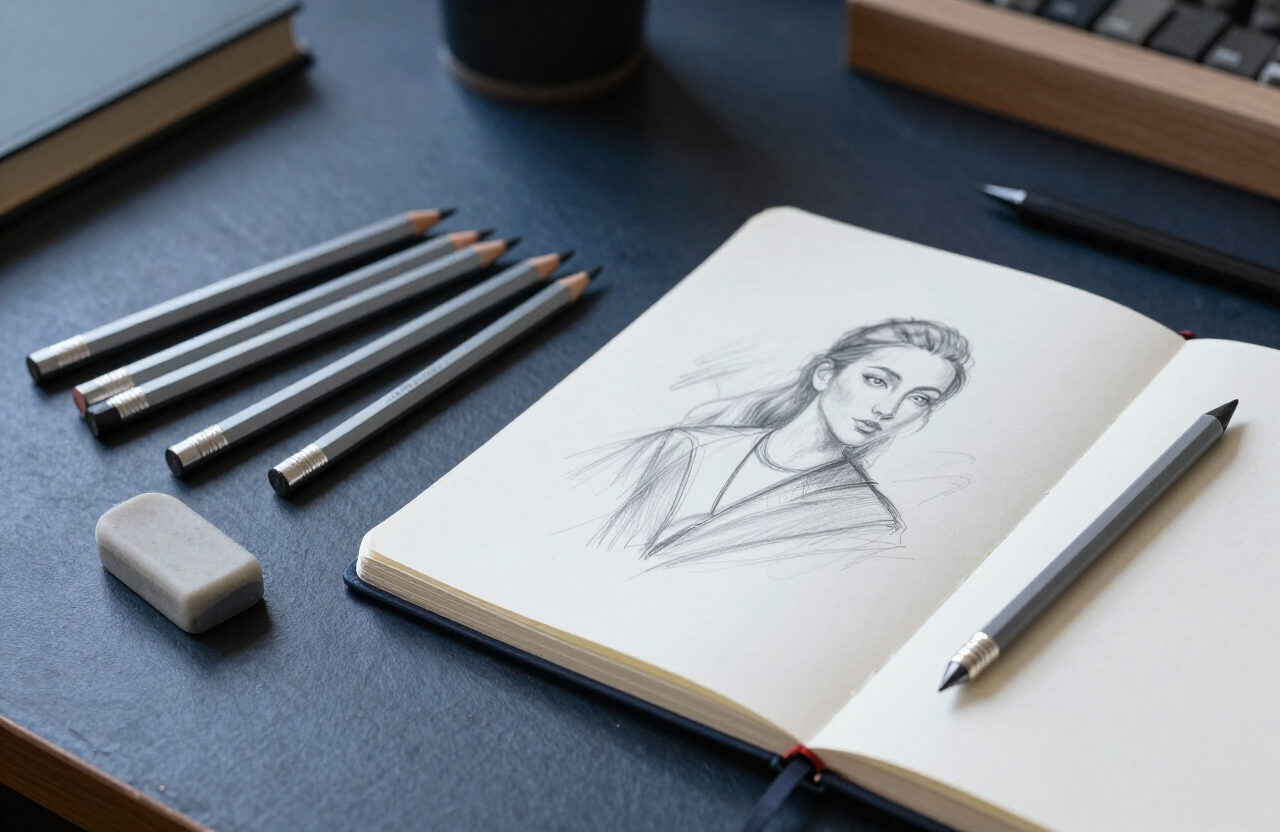
Strip away the packaging and drawing supplies fall into five groups: something that makes a mark (pencils, charcoal, graphite sticks), something that removes a mark (erasers), something that sharpens, something to draw on (paper), and a handful of blending tools. Everything else — blending stumps in twelve sizes, electric erasers, mahogany pencil extenders — is optional refinement.
The mistake most beginners make is buying breadth before depth. A single excellent HB pencil and a good sketchbook will teach you more than a 72-piece tin of mediocre tools. Buy the core five categories first, learn what your hand prefers, then expand with intent.
Graphite pencils: understanding grades
Pencil grades run from 9H (hardest, lightest) to 9B (softest, darkest), with HB in the middle. H pencils hold a fine point and suit technical work; B pencils lay down rich darks and smudge expressively. The grade is baked into the graphite-clay mix, so no amount of pressure makes an H pencil truly dark — it just embosses your paper.
For general drawing you need three grades: a 2H for light construction lines, an HB for general work, and a 4B or 6B for darks. Sets of twelve are convenient and usually cheaper per pencil, but check that the set spans at least 2H to 6B. Consistency between pencils matters more than brand prestige — this is where the established manufacturers (Faber-Castell, Staedtler, Derwent, Tombow) genuinely earn their premium over no-name sets.
Charcoal and graphite sticks
Charcoal is drawing with the volume turned up: darker darks, faster coverage, and far more forgiving gesture work. Willow charcoal is soft and erasable — ideal for blocking in. Compressed charcoal is denser and darker for committed marks. Vine charcoal sits between them. A small mixed pack covers all three for a few dollars.
Graphite sticks and woodless pencils are the same material as pencil cores without the wood casing. They cover large areas quickly and sharpen to a point when needed. They are not essential on day one, but they are the first upgrade we suggest once you start working bigger than a sketchbook page.
Erasers: the three you need
A kneaded eraser lifts graphite by pressing and pulling rather than rubbing, so it never damages paper tooth and never runs out — you knead it clean. It is the single most-used tool in most artists' kits. A white vinyl (plastic) eraser handles complete removal of stubborn marks. A precision eraser — a pen-style holder with a 2.3 mm refill — lets you erase highlights back into hair, fur, and foliage.
Avoid the pink rubber erasers of school memory; they smear graphite and abrade paper. The three types above cost under fifteen dollars combined and cover every erasing situation from whisper-light lifting to full removal.
Paper: tooth, weight, and sizing
Paper specs look arcane but only three matter for drawing. Weight (lb or gsm) tells you thickness — 60–80 lb (90–130 gsm) is fine for dry media sketching. Tooth is the surface texture: more tooth grabs more graphite and charcoal, less tooth suits fine pen lines. Sizing is an internal treatment that keeps media on the surface rather than soaking in.
A medium-tooth, 70 lb sketchbook from a known paper mill (Strathmore, Canson, Fabriano) is the right default. Newsprint is excellent for timed gesture practice because it is cheap enough to use fearlessly — but know that it yellows within years, so keep anything you care about on better stock.
How much should a beginner spend?
Our tested beginner drawing kit — a 12-grade graphite set, kneaded and vinyl erasers, a metal sharpener, a small charcoal pack, and a 100-sheet sketchbook — totals roughly $35–45. That is not a compromise kit; it contains the same pencil lines many professionals use daily.
Where money genuinely changes results: paper quality and pencil consistency. Where it does not (yet): presentation tins, imported eraser sleeves, and anything described as "deluxe." Spend the difference on a second sketchbook. Mileage beats materials at every stage of learning to draw.
Care and storage
Graphite and charcoal are nearly indestructible, but points are not. A simple wrap or hard case prevents the heartbreak of a tin full of snapped tips. Keep charcoal in its own bag or box — it dusts everything it touches.
Store sketchbooks flat and out of direct sun. If you draw with charcoal regularly, a can of workable fixative lets you layer without smearing, but use it outdoors or with ventilation, and know that it slightly darkens paper.
Drawing Supplies compared
The short version, side by side. Every row links to a fuller discussion in the guide above — and every product here earned its place in hands-on testing.
| Set | Contents | Best for | Typical price |
|---|---|---|---|
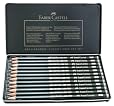
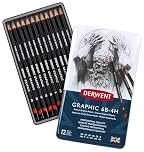
| 12 pencils, 6B–4H | The default beginner choice | $20–28 | |
| 12 pencils, 8B–2H | Softer range for tonal drawing | $18–25 | |
| 12 pencils, 9B–9H | Widest grade range | $15–22 | |
| Single grade, premium | Professionals restocking | $25–30 | |
| Willow + compressed + tools | Adding charcoal to a kit | $12–18 |
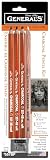
Beginner recommendations
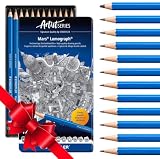 Staedtler Mars Lumograph 100 G12 graphite set
Twelve consistent grades from 6B to 4H in a metal tin. The most reliable first pencil set we have tested — every pencil in the box performs like the grade on its barrel.
Check price on Amazon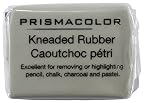 Prismacolor Premier kneaded eraser
The workhorse eraser. Lifts graphite and charcoal without abrading paper, never wears out, and costs less than a coffee.
Check price on Amazon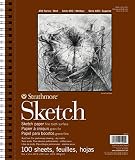 Strathmore 400 Series sketch pad, 9×12
A proper 60 lb drawing paper with enough tooth for graphite and charcoal. One hundred sheets of practice without fear of wasting "the good paper."
Check price on Amazon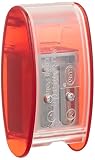 KUM long-point metal sharpener
Two-stage sharpening exposes more graphite for softer grades. Replaceable blades mean it outlives dozens of pencils.
Check price on Amazon
Professional recommendations
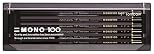 Tombow Mono 100 pencils
The benchmark for graphite density and point retention. Buy by the dozen in your two most-used grades; the finish and consistency justify the price for finished work.
Check price on Amazon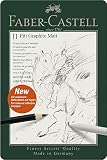 Faber-Castell Pitt Graphite Matt pencils
A genuinely matte graphite that kills the reflective sheen in deep darks — a real problem solver for scanned or photographed artwork.
Check price on Amazon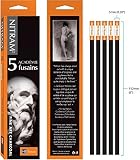 Nitram Academie charcoal
Batch-consistent willow charcoal in graded hardnesses. The difference from bargain charcoal is immediate: fewer hard inclusions, smoother laydown, cleaner erasing.
Check price on Amazon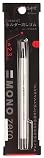 Tombow Mono Zero precision eraser
A 2.3 mm eraser in a pen body. For pulling highlights out of rendered areas it has no real substitute at any price.
Check price on Amazon
Drawing Supplies FAQs
Keep reading
Related guides from the drawing supplies shelf
Drawing Supplies
Best Sketchbooks for Artists: Tested Picks for Every Medium
We filled, soaked, and abused a shelf of sketchbooks to find the ones worth your drawings — organized by medium, with the paper specs that actually matter.
Read the guide
Drawing Supplies
Best Art Supplies for Beginners: The Honest Starter Kit
A complete, tested beginner art kit for under $100 — plus the five products beginners should never buy, and the upgrade order that makes every dollar count.
Read the guide