Art Storage & Organization
How to Build an Affordable Art Studio (Complete Setup Guide)
Published February 15, 2026 · Updated March 2, 2026 · 13 min read
A studio is a system, not a room
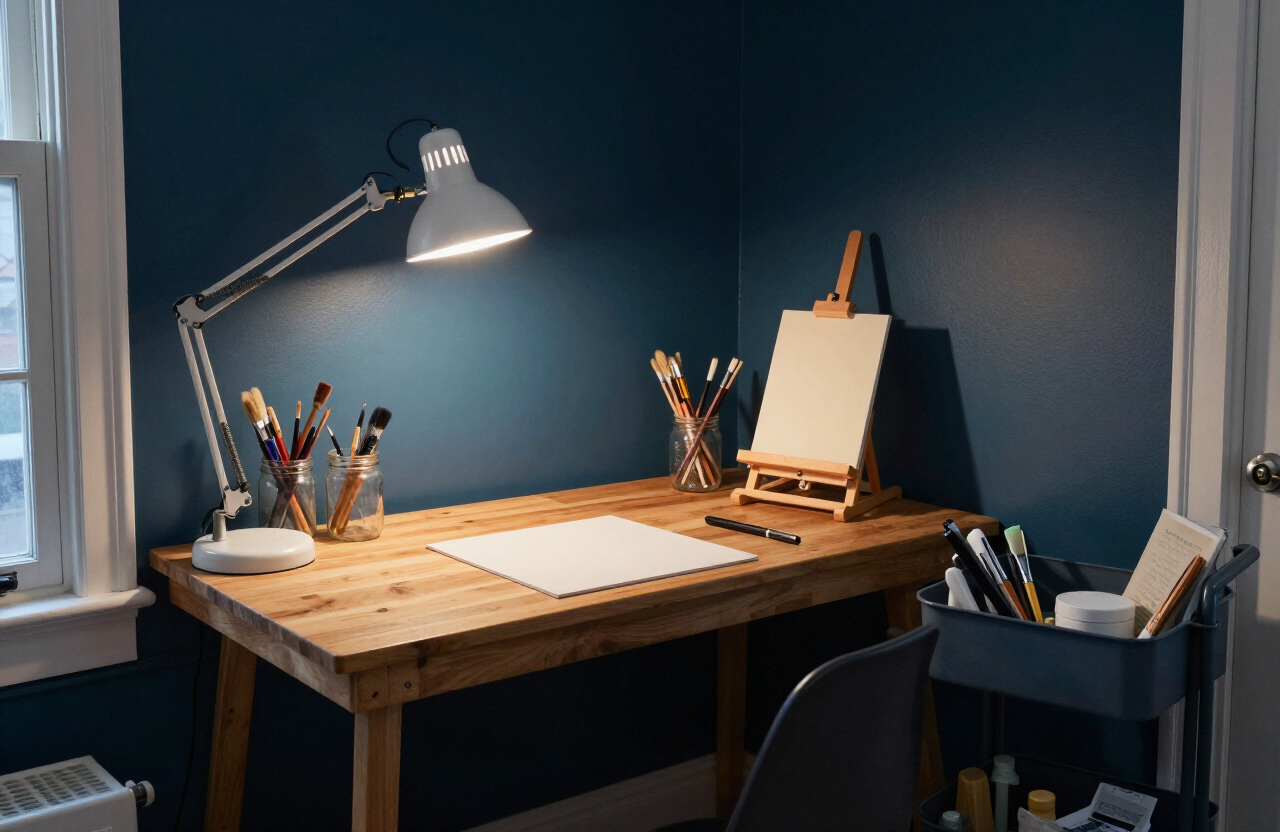
The biggest myth in art is that you need a dedicated room. You need a dedicated system: a surface that is always ready, light that tells the truth, and storage that puts your kit within arm's reach. A corner of a bedroom with those three things outperforms a spare room without them.
This guide builds that system for under $300, using secondhand furniture and the storage principles from our art storage guide. Every recommendation has run in our own working spaces.
Step one: claim and define the space
Pick a corner with the best natural light you have — north-facing is the classic choice because the light is cool and consistent, but any window beats no window. Define the territory physically: a rug, a specific desk, even tape on the floor. The boundary is psychological infrastructure — it tells your household, and your brain, that this zone is for work.
Measure before buying anything. A functional studio fits in 4×4 feet: desk, cart, and vertical wall storage. If you have more, wonderful — but plan the small version first and let it grow.
Lighting: the highest-value upgrade
Bad light makes good paint look wrong and honest drawing impossible. The fix costs thirty dollars: a daylight LED bulb (5000–6500K, 90+ CRI) in a clamp lamp aimed at your work surface. CRI — color rendering index — is the number that matters; anything under 90 lies about color.
Position the lamp opposite your working hand so your hand does not shadow the work. If you paint at night regularly, two lamps from opposite sides kill shadows entirely. This is the single purchase that most improves everything you make at home.
Furniture: secondhand and proud
The work surface: any sturdy table or desk. Secondhand solid-wood desks sell for $20–50 and outlast flat-pack furniture by decades. Cover the top with a cutting mat or a sheet of sealed hardboard and it becomes a proper workbench. Height matters: your elbows should rest at roughly 90 degrees when seated.
The chair is the one thing to buy carefully — you will sit in it for thousands of hours. A used office chair with adjustable height beats any stylish alternative. Easels are optional: a tabletop easel ($20–30) or a board propped against books handles most home-scale work.
Storage: the three-zone system
Zone one is the work surface: only the current project lives here. Zone two is arm's reach: a rolling cart (the IKEA Raskog is the standard) holding daily tools, paint, and water jars. Zone three is deep storage: bins and shelves for everything else, plus a portfolio or flat box for finished work.
Go vertical early. A pegboard or a couple of wall shelves above the desk doubles a small studio's capacity. Clear bins beat opaque ones — supplies you can see are supplies you use. The full philosophy is in our storage and organization guide.
Ventilation and safety
For acrylic, watercolor, and drawing, normal room air is fine — just do not sand dry clay or spray fixative indoors. For oil painting, work near an openable window, choose odorless mineral spirits, and keep solvents in sealed metal or glass containers.
A small fire extinguisher and a first-aid kit are unglamorous studio essentials. So is a dedicated "dirty" towel system: studio rags live in a lidded metal bin, especially if oil-soaked (oil-soaked rags can self-ignite in a pile — spread them flat to dry or store them wet in a sealed metal container).
The complete budget breakdown
Here is the full build, priced honestly at typical secondhand and retail rates. It assumes you already own art supplies; if not, our beginner kit guide adds about $100.
- Secondhand solid desk or table — $30–50
- Used adjustable office chair — $30–60
- Clamp lamp + 5000–6500K high-CRI LED bulb — $25–35
- IKEA Raskog rolling cart — $35
- Clear storage bins (6-pack) — $20
- Pegboard kit or two wall shelves — $25–40
- Tabletop easel or drawing board — $20–30
- Itoya portfolio for finished work — $25
- Total: roughly $210–305, with the chair and desk doing the heavy lifting
Make it effortless to start
The final test of a studio is friction: can you sit down and be working within sixty seconds? Leave the current project out. Keep the cart stocked and parked in reach. End every session with a two-minute reset — brushes washed, palette covered, surface cleared.
A studio that is always ready gets used daily, and daily use is the whole game. Build the system cheap, keep it ready, and let the work accumulate.
The picks, in one place
Our tested recommendations
 3-tier rolling utility cart
The arm's-reach zone on wheels — the keystone of a small studio.
Check price on Amazon Daylight Artist studio lamp
Truthful 95+ CRI daylight for painting — the highest-value upgrade in the build.
Check price on Amazon
 Dunwell 11×14 art portfolio
Finished work stored flat, clean, and ready to show.
Check price on Amazon
Frequently asked questions
Keep reading
Drawing Supplies
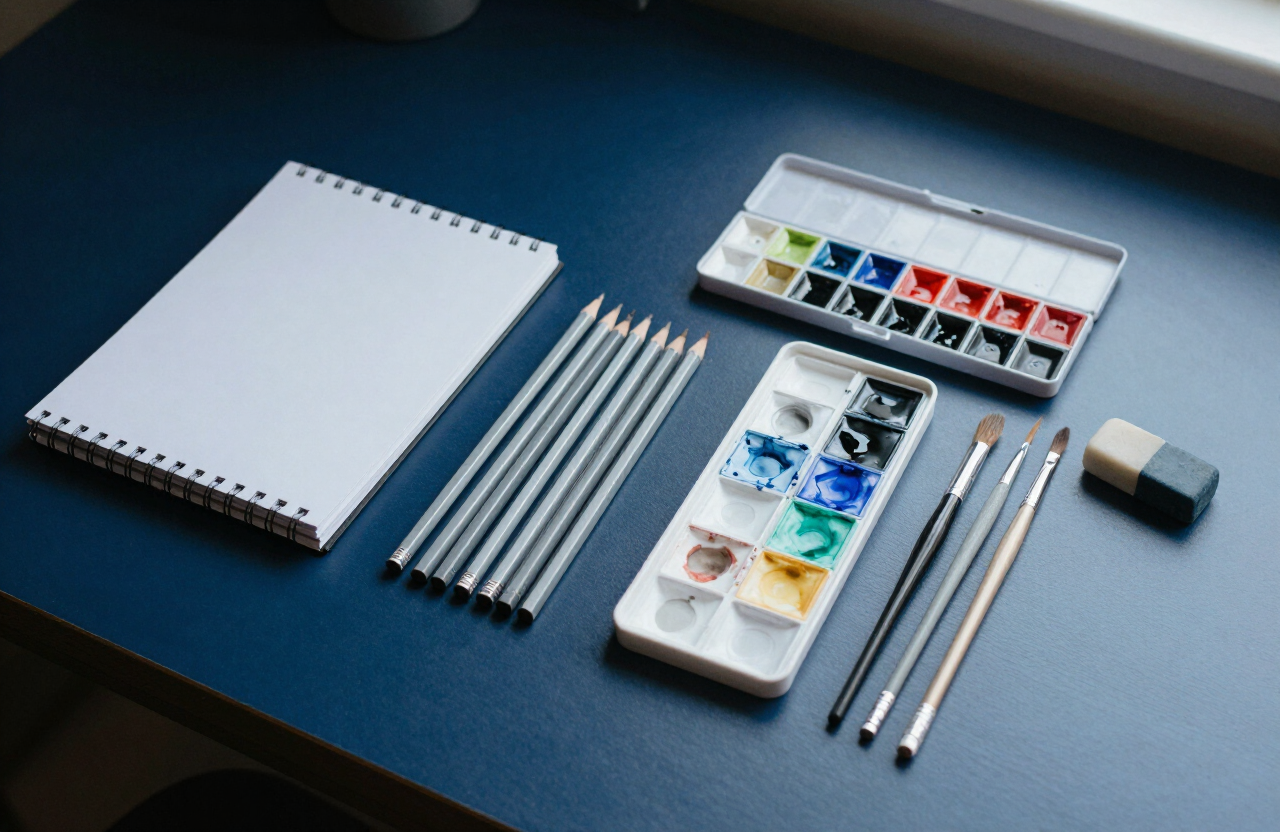
Best Art Supplies for Beginners: The Honest Starter Kit
A complete, tested beginner art kit for under $100 — plus the five products beginners should never buy, and the upgrade order that makes every dollar count.
Read the guide
Acrylic Painting Supplies
The Complete Acrylic Painting Starter Guide
From unopened tubes to a finished first painting: the complete acrylic starter path, with the exact kit, the setup, and the five mistakes that stall every beginner.
Read the guide